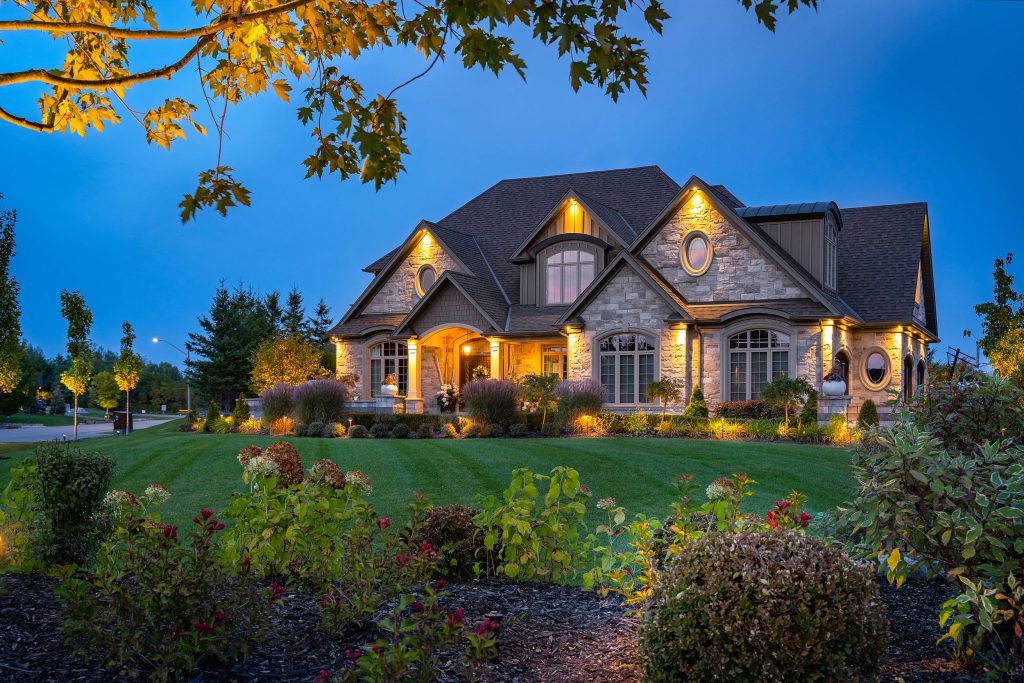
Landscape lighting can completely transform a property — or completely ruin the look of one. The difference between a stunning outdoor space and a yard full of glare, runway-style pathway lights, and dark corners usually comes down to a handful of key design decisions made early in the process.
After more than 25 years of designing and installing landscape lighting for homeowners and businesses across Oakville, Burlington, Mississauga, and the GTA, the team at Nite Time Decor has seen every mistake in the book — and every breathtaking result when these principles are followed. Here are 35 of the most important do’s and don’ts, organized by topic.
Planning & Design
Planning Do’s
1. Start with a plan, not a shopping cart.
The biggest design mistake homeowners make is buying fixtures before they’ve mapped out the property. Walk your yard at night before purchasing anything. Note which features catch your eye, which pathways feel unsafe, and where your eye naturally travels. A professional designer does exactly this — it’s called a lighting audit — and it prevents costly mistakes.
2. Light your home’s architecture first.
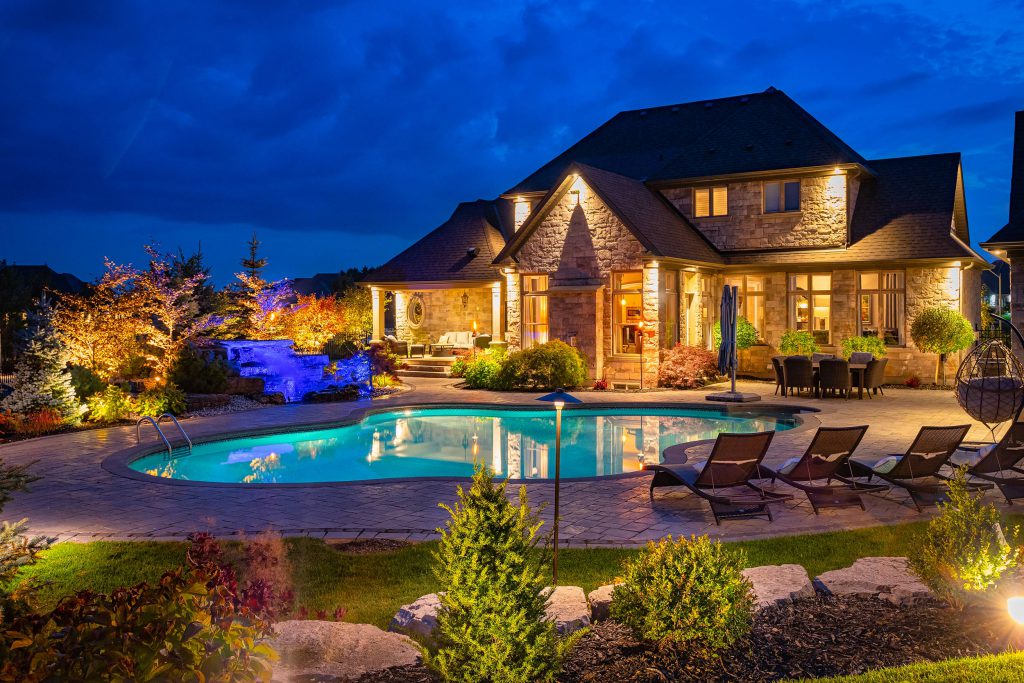
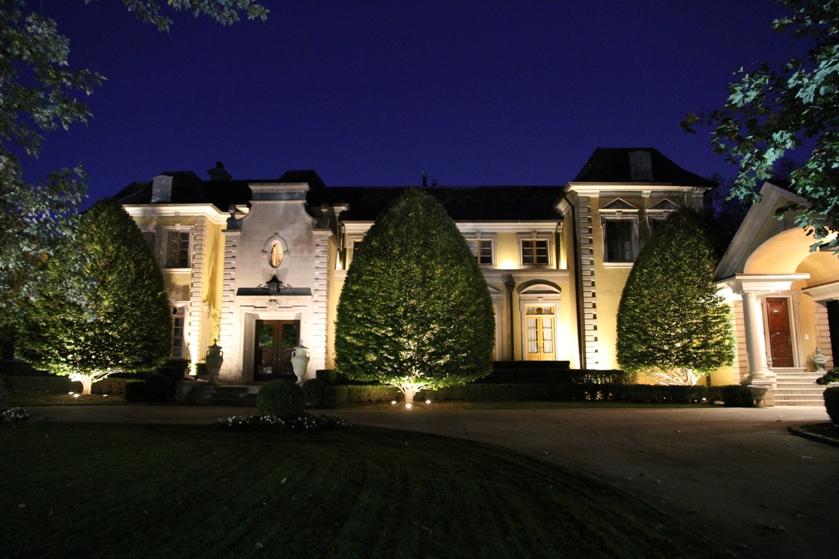
Before you think about trees, garden beds, or pathways, light the structure itself. Your home is the largest visual anchor on the property. Uplighting the facade and highlighting peaks, pillars, and architectural details creates a backdrop that makes everything else look intentional. Start at the front elevation, then work outward.
3. Think in layers.
The most beautiful landscape lighting designs work on multiple levels simultaneously — uplights in the garden, path lights along walkways, downlights from the eaves, and accent lights on focal points. Each layer adds depth. One layer on its own looks flat. This is the single most important design principle professionals apply on every job.
4. Consider your entire property as one connected design.
A beautifully lit garden surrounded by darkness looks like an island — not a design. When planning your system, consider how each zone connects visually to the next. Light should flow from the front of the property to the back with a sense of consistency and intention, not drop off abruptly at the edge of one zone.
5. Plan for how your plants will grow.
A tree that’s 10 feet tall today may be 25 feet tall in a decade. Fixture placement that looks perfect now can become buried in foliage or completely wrong for the scale of a mature plant. A professional system accounts for this with adjustable fixtures and transformer capacity that can expand with your landscape.
6. Think about how your lighting looks from inside the house.
Most homeowners focus on how their property looks from the street. But you’ll spend just as much time looking at your landscape from inside — through windows and patio doors. Design with both perspectives in mind. Some of the most satisfying lighting results are what you see looking out from your living room at night.
Planning Don’ts
1. Don’t over-illuminate.
This is the most common mistake in residential landscape lighting. More light does not mean better light. Outdoor lighting works because of contrast — the interplay between brightness and shadow creates drama and beauty. When everything is equally lit, you lose depth and the result looks flat or institutional. Think moonlight, not floodlight.
2. Don’t isolate zones.
Lighting only the driveway, only the front door, or only the garden bed creates harsh contrast with the surrounding darkness. Light should transition gradually. If you illuminate a tree, consider also lighting the surrounding bed. If you light the front door, carry some light along the walkway that leads to it.
3. Don’t ignore the second storey and roofline.
Many homeowners light the ground-level features and call it done. But peaks, gables, dormers, and upper-storey architectural details can be among the most dramatic elements to highlight. A home that’s lit from the ground to the roofline reads as complete; one that’s lit only at the base can look stubby or unfinished.
Fixtures & Technique
Fixture & Technique Do’s
1. Use a variety of fixture types.
Uplights, downlights, path lights, spotlights, wall washers, and in-ground fixtures all serve different purposes and create different effects. Using the same fixture everywhere makes a design look repetitive and dull. Mix fixture types to create visual texture — just keep colour temperature consistent throughout.2
2. Use uplighting to create drama and scale.
Uplighting — placing a fixture at the base of a tree, pillar, or garden feature and directing light upward — draws the eye up and gives plants and structures a sense of grandeur. A mature tree that looks ordinary during the day can become a breathtaking focal point at night when properly uplit from below.
3. Use downlighting wherever you can.
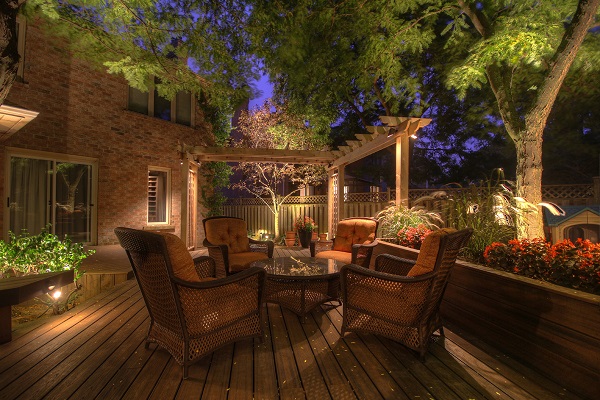
Downlighting is underused and underappreciated. Mounting a fixture under the eaves of a house, beneath a pergola, or high in a tree and directing light downward creates the most natural-looking result — it mimics how sunlight and moonlight actually fall. Path lighting done from above is far more elegant than stake-style path lights at ankle level.
4. Try moonlighting in mature trees.
Moonlighting is a technique where a fixture is placed high in a tree canopy and angled downward, allowing light to filter through leaves and branches. The result mimics natural moonlight and creates a soft, dappled effect on the ground below. It’s one of the most beautiful effects in landscape lighting — and one most homeowners don’t know about until a professional shows them.
4. Use grazing on textured surfaces.
Grazing means placing a fixture close to and parallel with a textured surface — a stone wall, a brick facade, a wooden fence — so the light skims across it and casts shadows that emphasize the texture. The effect turns an ordinary surface into something sculptural. It works especially well on natural stone.
5. Use silhouetting for dramatic plant profiles.
Silhouetting places a light source behind a plant or object, between it and a wall or fence. The result is a dramatic shadow outline of the plant’s profile against the lit surface. This works best with plants that have interesting branching structures — ornamental grasses, Japanese maples, and columnar evergreens all silhouette beautifully.
6. Light important focal points from multiple angles.
Lighting a statue, a large tree, or the main entrance from a single angle creates a flat, one-dimensional effect. Using two or three fixtures from different angles creates shadow and depth that reads as three-dimensional. The interplay of light and shadow from multiple sources is what gives professional installations their complexity.
7. Keep colour temperature consistent throughout.
Colour temperature is measured in Kelvins. For residential landscape lighting, 2700K–3000K (warm white) is the gold standard. It’s flattering on plant material, stone, and wood, and reads as warm and welcoming rather than clinical. Mixing colour temperatures — some warm, some cool — creates a disjointed look. Pick one range and stay with it across your whole property.
8. Install the right number of fixtures.
Homeowners trying to cut costs often buy fewer fixtures and increase bulb wattage to compensate. This creates exactly the problem you’re trying to avoid: harsh bright spots surrounded by deep darkness. It’s almost always better to use more fixtures at lower wattage. If budget is a constraint, phase the installation by zone rather than reducing fixture count in any one zone.
Fixture & Technique Don’ts
1. Don’t light pathways like a runway.
One of the most recognizable landscape lighting mistakes is lining both sides of a pathway with evenly spaced stake lights pointing straight up. The result looks like a landing strip. Instead, stagger lights on alternating sides, vary the spacing, or use downlighting from above. The goal is to illuminate the path safely, not announce it like an airport tarmac.
2. Don’t create unintentional shadows.
Light casts shadows. A poorly positioned fixture can create a dark void right where you wanted illumination, or cast a shadow across a stairway that becomes a tripping hazard. Before finalizing any fixture position, test it at night and look for unintended shadow patterns — especially near steps, grade changes, and entry points.
3. Don’t mix different bulb technologies.
Mixing halogen, LED, and solar fixtures in the same design creates inconsistent colour and brightness that looks haphazard. A fully LED system gives you control over colour temperature, brightness, and energy consumption, and produces the most consistent result across the property.
4. Don’t be afraid to experiment before committing.
Different wattages and beam spreads create dramatically different effects on the same object. Before finalizing fixture choices, test a few options on your most important focal points. Many professional installers — including Nite Time Decor — offer a free on-site demonstration so you can see the actual result before any installation begins.
Technology & Products
Technology Do’s
1. Choose LED over all other technologies.
This is no longer a close debate. LED landscape lighting lasts 3–5x longer than halogen, uses a fraction of the energy, produces less heat, and is available in a full range of colour temperatures and beam spreads. A system of 10 LED fixtures running 5 hours per night every day for a year adds roughly $8–$15 to your annual hydro bill in Ontario. The upfront cost is offset quickly by energy savings and reduced replacement costs.
2. Use a quality transformer with capacity to grow.
Your transformer is the heart of a low-voltage landscape lighting system. A cheap transformer will fail prematurely and may damage your fixtures. A quality transformer should be sized at no more than 80% of its rated capacity at installation, leaving room to add fixtures over time. Professional-grade transformers also offer multiple zones, allowing different areas to be programmed on independent schedules.
3. Use programmable timers and smart controls.
Modern landscape lighting systems can be controlled from your smartphone, integrated with Google Home and Amazon Alexa, and programmed with seasonal schedules that automatically adjust for shorter winter days. You can create different lighting scenes — a security mode when you’re away, a party mode for entertaining, and a sleep mode that dims or turns off lights at a set hour. If your current system doesn’t have this capability, it’s worth upgrading.
4. Use shielded fixtures to control light direction.
A well-designed fixture hides the bulb entirely. What you should see is the effect — the lit tree, the illuminated pathway — not the source. Shielded fixtures prevent glare, prevent light trespass onto neighbouring properties, and allow precise aiming. If you can see the bulb directly, the fixture is either wrong for its application or incorrectly positioned.
4. Invest in commercial-grade products built for Canadian winters.
Outdoor fixtures face freeze-thaw cycles, UV exposure, precipitation, and temperature extremes. In Ontario, this means a fixture that needs to perform from -25°C in January to +35°C in August. Consumer-grade fixtures from big-box stores are typically rated for 1–3 years of outdoor use. Commercial-grade fixtures installed by a professional are built for 10–15+ years. The difference in long-term cost is substantial.
Technology Don’ts
1. Don’t rely solely on solar lights.
Solar landscape lights are popular because they’re wireless and easy to install. But in Ontario, solar performance drops 30–50% in winter months when sunlight hours are shortest. Solar lights also can’t be shielded or precisely aimed the way hardwired fixtures can. They’re fine for casual accent use, but not reliable as the primary light source for any zone you care about.
2. Don’t use consumer-grade box kits for a permanent installation.
The low-voltage kits sold at hardware stores typically come with limited wiring that restricts placement flexibility, plastic fixtures with 1-year warranties, and a basic transformer with no zone control or smart features. The cost difference between a box kit and a professional system looks large upfront but reverses quickly when replacement costs are factored in.
3. Don’t use unshielded floodlights as a primary strategy.
Floodlights have their place — security lighting for a dark corner of a commercial property, for example. But as a residential landscape lighting strategy, bare floodlights create glare, light trespass, and an institutional look that undermines the aesthetic appeal of even the most beautiful property. Modern LED uplights and spotlights deliver far better results with precise beam control.
Safety & Neighbour Etiquette
Safety Do’s
1. Light all level changes — steps, stairs, and grade transitions.
Any step, stair, or elevation change on your property — particularly those used by guests — must be clearly lit. Path lighting along a flat walkway is aesthetic; lighting at grade changes is a safety and liability issue. Every step should be illuminated from the side or above so the edge is clearly visible at night.
2. Illuminate shrubs and entry points for security.
Landscape lighting is one of the most effective deterrents against property crime. A well-lit property has no dark hiding places near windows, doors, or fences. Lighting dense shrubs, side-yard gates, and the perimeter of your property removes the concealment that opportunistic intruders rely on. Motion-activated zones in these areas add an additional layer of deterrence.
3. Aim every fixture intentionally, not just approximately.
Every fixture should illuminate exactly its intended target — nothing more. Before finalizing any fixture position, stand where a neighbour, driver, or pedestrian would stand and check whether the light source is visible in their line of sight. Fixtures mounted at or above eye level should be aimed at less than 45 degrees from vertical. Spotlights should never be aimed horizontally.
4. Obtain any required permits.
In Ontario, most permanent landscape lighting installations — particularly those involving a transformer and buried wiring — require a permit from the Electrical Safety Authority (ESA). A professional installer handles permitting as part of their service. This matters most when you sell your home: unpermitted electrical work can surface during a home inspection and complicate or delay the sale.
Light trespass — when your outdoor lighting spills onto a neighbour’s property, into their bedroom window, or across their yard — is one of the most common neighbour complaints in residential areas. The solution is shielded fixtures, correct aiming, and testing your installation at night from your neighbour’s perspective before calling it complete.
2. Don’t direct light into lines of sight.
Light that shines directly into the eyes of someone approaching your driveway, walking along the sidewalk, or looking at your property from the street reduces rather than improves visibility. This is called disability glare. Every fixture should be aimed at a surface, not into open air or at face height.
3. Don’t skip the nighttime test before finalizing.
Fixture positions that look logical during the day often produce unexpected results after dark. Shadows fall differently than expected. A spotlight aimed at a tree turns out to illuminate a neighbour’s fence. A path light positioned symmetrically creates a blinding effect at gate height. Always do a full nighttime walk of the completed installation and adjust before calling it done.
Maintenance & Longevity
Maintenance Do’s
1. Schedule a spring inspection every year.
Ontario winters are hard on outdoor lighting. Frost heave can shift fixture positions. Buried wiring can be disturbed by freeze-thaw movement. Snow clearing equipment can knock fixtures out of alignment. A spring inspection should check alignment, test all zones, clear debris from fixture lenses, and reset timer schedules for longer daylight hours ahead.
2. Clean fixture lenses regularly.
Dirt, algae, and mineral deposits build up on fixture lenses over time and can reduce light output by 20–30% without you noticing. A simple wipe-down with a damp cloth and mild detergent twice a year keeps your system performing at full capacity. Fixtures near water features or in humid areas may need more frequent cleaning.
3. Trim vegetation around fixtures seasonally.
A beautifully aimed uplight can be completely buried in foliage by August, or have its beam path blocked by overgrown ground cover. Seasonal trimming around fixtures is as important as the annual inspection. Part of maintaining a landscape lighting system is maintaining the sightlines it depends on.
4. Adjust timer schedules for seasonal changes.
In Oakville and Burlington, sunset in late December arrives before 5:00 PM; in late June it’s after 9:00 PM. A timer set in spring will run your lights for unnecessary hours in summer, or fail to activate them early enough in winter. Smart systems with astronomical timers adjust automatically. If yours doesn’t, update the schedule at each season change.
5. Work with a company that offers a maintenance guarantee.
Even the best systems need occasional attention. Nite Time Decor includes a six-month follow-up inspection with every installation and offers a lifetime maintenance guarantee. This ongoing relationship is a large part of what separates a professionally installed system from a DIY kit.
Maintenance Don’ts
1. Don’t leave a malfunctioning fixture unaddressed.
A single dark fixture breaks the continuity of a lighting design immediately. Visitors notice asymmetry and dark spots far more quickly than most homeowners expect. Address malfunctions promptly — it’s usually a simple fix, but leaving it unattended typically leads to more extensive damage over time.
2. Don’t run wiring where it can be damaged by lawn equipment.
One of the most common causes of landscape lighting failure is wire damage from lawn mowers, edge trimmers, and aerators. Wiring should be buried at a minimum depth of 6 inches in areas where it crosses lawn or garden beds, protected by conduit near high-traffic areas, and clearly mapped so future landscaping work doesn’t accidentally cut through it.
Working with a Professional
Hiring Do’s
1. Ask to see a portfolio of completed installations.
Any credible landscape lighting company should be able to show you photos of completed residential installations in your area. Look for variety — properties similar in scale to yours, and a range of techniques. Nite Time Decor maintains an extensive residential and commercial gallery for exactly this reason.
2. Ask about the brands they use and why.
Professional installers source fixtures from manufacturers not available at retail — companies whose products are built for commercial longevity. Ask which brands they install and look them up. If they can’t name a manufacturer, that’s a flag.
3. Verify credentials, insurance, and ESA registration.
A legitimate landscape lighting company in Ontario should carry liability insurance, be registered with Service Ontario, and be able to pull ESA permits for your installation. BBB accreditation and verifiable online reviews are also worth checking.
4. Ask for a nighttime demonstration before committing.
Nite Time Decor offers a free lighting demo where their team brings fixtures to your property and shows you the actual effect before you commit to anything. This is the gold standard in the industry. If a company won’t show you the result before installation, you’re buying blind.
Hiring Don’ts
1. Don’t hire based on price alone.
A company that underbids significantly is almost always using inferior materials, cutting corners on installation practices, or planning to upsell you on maintenance you shouldn’t need. Get multiple quotes, understand what’s included in each, and compare value — not just the bottom-line number.
2. Don’t skip the consultation process.
The design consultation is where a good lighting company earns their fee. This is when they walk your property, understand your goals, and propose a design specific to your home — not a template applied to every job. A company that gives you a quote without walking the property at night hasn’t done enough due diligence to give you an accurate proposal.
About Nite Time Decor
Nite Time Decor has been designing, installing, and servicing landscape lighting for homeowners and businesses across Oakville, Burlington, Mississauga, Halton, and Hamilton since 1998. Every installation comes with a free lighting demo, permit handling, and a lifetime maintenance guarantee.
Ready to see what professional landscape lighting can do for your property? Nite Time Decor offers a FREE on-site lighting demonstration for homeowners in Oakville, Burlington, and the GTA. Call 1-800-952-3006 or request a quote online.
The three rules most professionals cite are: light in layers (don't rely on a single type or level of fixture), control glare (use shielded fixtures aimed at surfaces, not at people), and maintain contrast (not everything needs to be equally lit — let some areas recede so the highlighted features stand out).
It depends on your property size, architecture, and design goals. A modest front yard might need 8–12 fixtures, while a full-property design for a larger property in Oakville or Burlington might use 20–40+. The key is to size zones correctly rather than trying to cover the whole property with too few fixtures at high wattage.
For residential landscape lighting, 2700K–3000K (warm white) is the industry standard. It's flattering on most plant material, stone, brick, and wood siding, and creates a warm, welcoming atmosphere. Avoid cool white (4000K+) for residential use — it reads as clinical and harsh in a garden setting.
Low-voltage (12V) LED systems are the standard for residential landscape lighting. They're safer to work with, cheaper to run, compatible with smart controls, and sufficient for virtually every residential application. For most Oakville and Burlington homeowners, low-voltage LED is the right choice.
Use shielded fixtures that direct light toward a specific surface rather than outward. Aim every fixture at a target, not into open air. Test your installation at night from the street and from your property line. Keep fixtures aimed at less than 45 degrees from vertical. Use a timer so lights aren't running late into the night.
A low-voltage LED system is extremely economical. Ten LED fixtures running five hours per night every day for a year adds approximately $8–$15 to your annual hydro bill. Even a large system of 30 fixtures would add less than $50 per year in energy costs.
At minimum: a spring inspection to check alignment and clean lenses, seasonal timer schedule updates, and periodic vegetation trimming around fixtures. A professional maintenance agreement covers all of this and gives you a point of contact when something needs repair.
Consistently yes, for most homeowners in the Oakville, Burlington, and GTA market. Professional landscape lighting can deliver up to 50% ROI when selling. Beyond resale value, it extends the usable hours of your outdoor space, improves security, and enhances the curb appeal of a property you've already invested significantly in.
At Nite Time Décor Oakville, we often tell prospective customers to think about how they use their outdoor space before selecting and installing an outdoor lighting design for their home. This also includes how their furry family members use the space too.
So we’ve compiled 4 great tips for homeowners for pet-proofing their landscape lighting.
It’s a simple piece of advice, but it goes a long way. Some homeowners know they want an outdoor lighting design, but don’t know where to start. If you stop for a moment and really think about how you use your outdoor space, it will allow you to create an outdoor lighting design that is perfectly suited to your needs.
What homeowners sometimes fail to think about it not how they use their outdoor space, but who is using the outdoor space. Perhaps you like to sit out and relax under the stars, or barbeque a nice late-night meal. Maybe you have teenagers who like to use the hot tub or play board games on the patio.
When you consider who uses the space and how they like to use it, don’t forget about your four-legged fury friends!
Most times, your dog or cat is the one who uses your outdoor space the most, so it’s only fair that you consider them when selecting and installing an outdoor lighting system so its pet-proof. To make sure everyone in your family can enjoy your outdoor lighting design, follow these four pet-proofing tips.
Protect Wires
Dogs, like young children, do not understand the concept and associated dangers of electrical wires. This means that you need to protect any electrical wires that are a part of your outdoor lighting design.
At Nite Time Décor, our experienced team will professionally install your outdoor lighting design and make sure all electrical wires are out of sight and protected.
If you’ve performed a do-it-yourself installation or have had your outdoor lighting design installed by someone who is not a professional, you run the risk of having exposed electrical wires. If this is the case, contact our talented team at Nite Time Décor to have the exposed wires re-installed and ensure the safety of your pets and loved ones.
Create Barriers
If your four-legged friend likes to snoop or dig round the lawn and garden, it’s best to create barriers between your light fixtures and your pet. Decorative rocks act as great barriers. Simply place decorative rocks around your fixtures or overtop of areas that have underlying wires to ensure your pet does not accidentally uncover fixtures or wires.
Remove Vegetation Barriers
While creating barriers between your dog’s paws and light fixtures is a good pet-proofing technique, you’ll want to prune back or remove vegetation barriers that might surround your fixtures. Excessive vegetation or foliage can camouflage your fixtures and might cause your pet to unknowingly uncover a fixture – or potential chew toy – while snooping through the garden one day.
Conduct Regular Checks
The best way to discover a potential hazard before it becomes a danger to you or your furry friend is to perform regular checks around your home and landscape. Look for damaged fixtures or bulbs, or chewed wires. Exposed wires, broken bulbs and damaged fixtures are all hazards that can put you, your family and your pet at risk.
Contact Nite Time Décor
Pet-proofing your home and outdoor lighting design is the responsible thing to do if you have dogs or pets that enjoy your outdoor space as much – or even more – than you do. To increase safety, contact our lighting experts at Nite Time Décor to perform your pet-proofing service, or have our team professionally install your next outdoor lighting design.
We serve homeowners and businesses throughout Mississauga, Burlington, Oakville, Halton and Hamilton regions.
Brilliant Outdoor Lighting Ideas for Small Patios and Balconies: Brighten Up Your Space with Nite Time Décor
When it comes to outdoor lighting design, most people think of illuminating front entrances, walkways, large backyards, or beautiful trees and gardens. While these areas are great to highlight in a landscape lighting design for large outdoor spaces, it’s also important to remember that small spaces—like patios and balconies—can benefit from professional outdoor lighting too.
Why Illuminate Your Small Outdoor Space?
Just like illuminating any large outdoor area, adding some light to a patio, deck, or balcony after the sun goes down allows you to create valuable extra living space. Let’s face it: the patio or balcony is great for relaxing during daylight, but once the sun sets, it can become underused. With expertly installed outdoor lighting, you can extend your evenings outdoors and maximize every inch of your space.
With the right landscape lighting design, you can create a warm, calming atmosphere—perfect for entertaining guests, dining al fresco, or simply relaxing under the stars. Whether your space is cozy or compact, the right lighting will make it more inviting.
Tips for Small Patio and Balcony Lighting
To get you started with planning the perfect outdoor lighting design for small spaces, we’ve compiled a list of important aspects to consider before making any purchases, as well as some popular outdoor lighting solutions you may want to incorporate into your new lighting plan this summer.
1. Determine the Primary Use of Your Outdoor Space
When it comes to designing a lighting plan for a small patio or balcony, first think about how you use the space most often. Will you be outside after dark barbecuing, dining, reading, or hosting guests?
Clarifying the purpose of your outdoor area helps guide your lighting choices. For example, task lighting may be needed for a cooking zone, while ambient lighting works well for reading or lounging.
2. Map Out the Space Before You Install Lighting
Before creating your custom outdoor lighting design, take time to map out your space. Consider the existing layout, including any furniture, planters, or structures.
If there are windows or glass doors directly facing your balcony or patio, take those into account when choosing the right lighting options. For example, if your balcony faces a bedroom window, choose low-voltage, subtle lighting to avoid disturbing household members or neighbours.
3. Add Ambience with String Lights
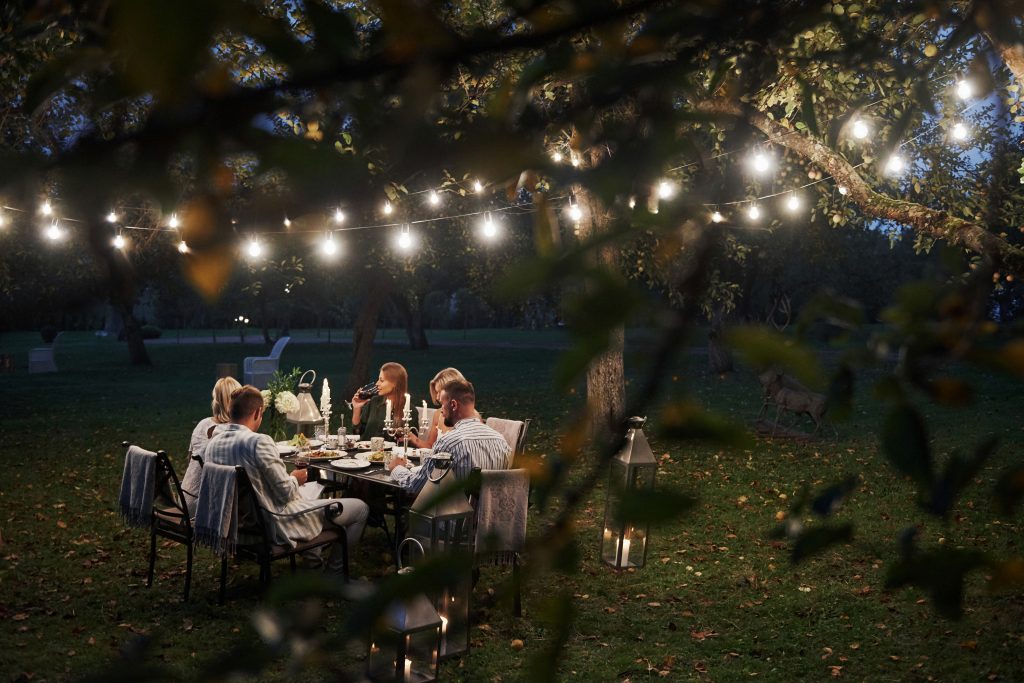
Outdoor string lights are one of the most versatile and timeless choices for small spaces. Whether you drape them overhead, weave them through railings, or tuck them into greenery, string lights bring warmth and charm to patios and balconies.
They’re also easy to install and offer budget-friendly outdoor lighting solutions for renters and homeowners alike.
4. Choose Warm LED Bulbs for a Cozy Glow
To create a cozy and inviting mood, choose warm-coloured LED bulbs. These are ideal for small outdoor areas because they provide just the right level of illumination without being harsh or overpowering.
LED outdoor lights are also energy-efficient, long-lasting, and can withstand Canada’s changing weather—making them a smart investment for year-round landscape lighting.
5. Use Professional Lighting Design for Best Results
Even small spaces can benefit from a well-thought-out outdoor lighting plan designed by professionals. Strategic placement of fixtures, careful attention to safety and code compliance, and selection of quality materials all help ensure your space looks beautiful and functions perfectly.
Design Inspiration from TV: Small Spaces, Big Style
The rising popularity of home design shows like HGTV’s “Small Space, Big Style,”“Tiny House Nation,” and Netflix’s “Dream Home Makeover” has proven one thing: when it comes to outdoor and indoor living, size doesn’t limit style. These shows spotlight clever, creative ways to maximize smaller spaces without sacrificing comfort or visual appeal. And just like interior design, exterior lighting design plays a key role in making compact areas functional and beautiful.
In fact, many of the backyard transformations on these programs showcase the power of strategic patio lighting—from soft uplighting along privacy walls to elegant string light canopies and recessed deck lights that define the space while adding ambiance. Inspired by these shows, more homeowners are realizing that professional outdoor lighting isn’t just for large properties with sprawling gardens. It can completely transform the look and feel of a modest balcony, terrace, or urban backyard.
Just because your outdoor area is small doesn’t mean it has to be overlooked. Like the stylists and designers on these shows often say, lighting is one of the easiest ways to instantly elevate a space, especially at night. When chosen and installed correctly, lighting becomes both a practical and aesthetic feature. It draws the eye, sets a mood, and encourages people to gather and linger—even after dark.
How to Apply These Ideas to Your Home
Take inspiration from these TV transformations and consider zoning your outdoor space with light. Use wall sconces or step lights to highlight specific zones like a dining nook or reading chair. Add planter lighting to show off greenery or herbs. Accent lights tucked into corners can give the illusion of depth, making small areas feel more expansive.
You can also bring an interior design mentality to your outdoor setup. Think of lighting as layered: start with ambient light, add task lighting where needed, and then finish with accent lighting to highlight textures, plants, stairs or architectural details.
By working with a lighting design specialist like Nite Time Décor, you get a personalized approach that ensures every fixture and bulb works with your layout, your lifestyle, and your taste. Just like your favourite designers on TV, we’re focused on making the most of every square inch—turning small spaces into standout features of your home.
Contact Nite Time Décor for Beautiful Custom Outdoor Lighting Design and Installation
Whether you’re just getting started with outdoor lighting for your small patio or balcony, or looking to upgrade your current lighting system, Nite Time Décor is here to help. Our team of professional landscape lighting designers will work with you to create a space that reflects your style, meets your needs, and enhances your property’s curb appeal.
We proudly serve homeowners and businesses in Oakville, Burlington, Mississauga, Hamilton, and the surrounding Halton Region. Let us help you transform your small outdoor space into your favourite place to relax.
Contact us today to schedule a free consultation and discover how custom outdoor lighting can make a big impact—even in small spaces.
DIY vs Professionally Installed Outdoor Lighting – What is the Best?
The summer outdoor entertaining season is almost upon us. Is your yard guest-worthy? Why let all that hard landscaping effort go to waste once the sun goes down? With well-placed lighting, you can enjoy the beauty of your gardens and yard all night long. But lighting is expensive, we hear you.
Do you really need an expert or can you pull this off on your own?
DIY Projects
Budget
If your budget or interests dictate something simple like staked-in solar pathway lighting, definitely do that yourself.
The solar lighting is dependent on receiving enough sun so keep in mind how much sun that area receives, and how important it is to have good light year round. In winter especially, solar powered devices may be weaker than in the peak summer months. You’ll likely have to replace them frequently, but that leaves lots of opportunities to change things up.
Cheaper Low-Voltage Products
There are a variety of boxed outdoor lighting sets in numerous shapes, sizes, and prices on the market. These are typically low-voltage units, and come with numerous fixtures but minimal wiring limiting the range and placement of lights. Often, these cheaper options come with poor quality fixtures, switches, timers, and parts. These types of sets typically come with a 1 year warranty, so replacing these parts may happen more frequently than you’re prepared for.
Durability
As soon as you place lighting outside, it’s at the mercy of the elements. Ask yourself if the set you have your eye on will stand up to Mother Nature twelve months of the year. Don’t throw away your hard-earned money. Plastic parts and cheap components will only cause more headaches down the road.
DIY Skillset
DIYers need to honestly evaluate their skill level. Do you have a good working knowledge of electrical parts and components? The heartbreaking consequences of these mistakes can’t be fixed with money.
Professional Installation
Here are five great reasons why we think hiring a professional will pay off in the end and make you glad you never went DIY.
Experience
Landscape lighting designers have extensive experience on a large variety of projects. They understand what’s essential for outdoor lighting and will help you realize your dreams for lighting those outdoor spaces while keeping your budget in mind.
They understand what works well together and what doesn’t. They can see the overall project and understand how smaller changes affect the big picture.
Professional lighting experts will work with you to help personalize your system with your own sense of style, while showing you the available options each step of the way and making suggestions that will help bring the whole system together into one cohesive lighting design.
Safety
Professional outdoor lighting designers and installers are trained in working with electricity and electrical systems. It only takes one wrong move when dealing with electricity and you are dealing with damage to the equipment and wiring or worse to you or a loved one.
Understanding how to work around other utilities means they know who to contact for proper locates and how to design and work around them safely without compromising your vision for illuminating those outdoor spaces after dark.
The DIY handyman needs to honestly assess whether they’re comfortable working with electricity (sometimes electricity and water), heights, or digging.
Safety for everyone is a priority before, during and after the installation of your outdoor lighting system. Experienced lighting designers understand electrical code and inspection requirements and will work with the local authorities to ensure all required permits and inspections are completed.
Fixture Selection
For the average homeowner, fixture selection is limited to what is available at the local hardware store. This is not the case for Nite Time Decor or other professional lighting service companies. Landscape lighting service providers have access to many different high-quality manufacturers and suppliers (many unavailable in big box stores) and can help you choose not just an adequate fixture for each space, but the fixture best suited to the aesthetic, budget and lighting requirements for that space. With Nite Time Decor, your options are endless when it comes to available fixtures and styles.
Outdoor Lighting Design
Professional installation means that your yard won’t look like everyone else’s on the block.
Whether you’re looking to enhance curb appeal, provide better security, or provide ambiance to your yard after dark, professionals will recommend fixtures and elements, with varying bulb wattage and colours, prevent annoying glares and creepy shadows, and ensure distinctive highlights are prominent.
At Nite Time Decor our talented team of designers offer beautiful illuminating ideas for all types of properties, including commercial highrises, nightclubs, restaurants, and residential properties. From big installations to small repairs, Nite Time Decor offers all of the products and services needed to meet your unique lighting requirements.
Warranty and Maintenance
Most lighting companies including Nite Time Decor, stand behind their work and will work with you until it’s done to your satisfaction. The provide a warranty for their lighting fixtures. They can help you understand the programming and regular maintenance of your system. They will be there for you long after the installation is complete. Having a good maintenance plan and ongoing support is value that cannot be replaced when installing your own DIY outdoor lighting system.
Those are just a few of the many benefits of hiring a professional landscape lighting designer and installer to help you with your outdoor lighting project.
Contact Landscape Lighting Experts
Landscape lightings adds visual interest to your home while simultaneously making it safer and increasing its property value. If you would like to discuss your landscape lighting project, or request a free estimate, contact Nite Time Decor today!
Choosing the right lighting for your outdoor space can feel overwhelming. There are many options—fluorescent, incandescent, LED. But one critical choice often gets overlooked: low voltage vs. high voltage lighting.
This decision impacts your home’s safety, beauty, and energy efficiency. If you’re planning a new system or upgrading an old one, understanding the pros and cons of each lighting type is key. Let’s explore your options and show why working with Nite Time Décor, your local outdoor lighting expert, can make all the difference.
What Is Low Voltage Lighting?
Low voltage lighting uses 12 volts of electricity. A transformer converts the standard household 120V current down to a safe 12V. These systems are ideal for residential properties and decorative landscaping.
Pros of Low Voltage Lighting
Energy Efficient and Cost Effective
Low voltage lights use less power. You’ll save on electricity and reduce your carbon footprint. LED options give excellent light output while keeping energy costs low.
Safe for Families and Pets
Because they run at just 12 volts, low voltage systems are safer. There’s less risk of electrical shock, especially in wet conditions.
Easier and Cheaper to Install
Most systems plug into outdoor receptacles. You won’t need permits or licensed electricians for most installations. This keeps installation costs down.
Flexible and Easy to Move
Fixtures don’t need deep trenches or conduit. You can adjust or move lights easily to accommodate landscaping changes.
More Design Options
Low voltage lighting comes in many styles and finishes. You can light walkways, highlight plants, and create dramatic focal points with ease.
Ideal for Accent and Mood Lighting
These lights provide excellent beam control. You can create warm, inviting environments in your garden, patio, or yard.
Cons of Low Voltage Lighting
Requires a Transformer
A transformer is needed to reduce power from 120V to 12V. This adds a component to install and maintain.
May Dim Over Distance
Long cable runs can cause voltage drop. If not installed properly, lights can appear dimmer the farther they are from the transformer.
What Is High Voltage Lighting?
High voltage or “line voltage” lighting uses 120 volts of electricity—direct from your home’s electrical system. These are common in commercial spaces and areas requiring bright, wide coverage.
Pros of High Voltage Lighting
Bright and Powerful Light Output
High voltage systems produce intense light. They are great for large properties, parking lots, or uplighting big trees.
Fewer Fixtures Needed
One high voltage fixture can light a wide area. This reduces the number of fixtures required.
No Transformer Needed
These systems run on your home’s power supply. That means no need for a separate transformer.
Cons of High Voltage Lighting
Requires Professional Installation
Due to safety concerns and electrical codes, a licensed electrician must handle installation. This raises labor costs.
Higher Risk of Electric Shock
All fittings must be waterproof. Wet conditions can pose a serious hazard if not installed correctly.
Difficult to Modify
High voltage wires must be buried 18 inches underground. Making changes later can require major digging and disruption to your yard.
Can Cause Glare
Because they’re so bright, it’s harder to direct the beams. This can lead to glare and light pollution.
Low Voltage vs. High Voltage – Which Is Best for You?
Most homeowners prefer low voltage systems for flexibility, safety, and style. They’re easier to install, cost less to operate, and offer more control over lighting effects.
High voltage systems are better suited for security lighting or large-scale commercial spaces where maximum brightness is critical.
Still unsure what’s best? That’s where Nite Time Décor comes in.
Why Choose Nite Time Décor for Outdoor Lighting Installation?
Whether you prefer the versatility of low voltage lighting or the power of high voltage systems, Nite Time Décor is here to help you choose the perfect solution for your outdoor space. Our team of professional lighting experts will guide you through every step of the process—from custom design to professional installation—ensuring your property looks stunning and functions beautifully after dark. We proudly serve Halton, Burlington, Oakville, Hamilton, and Mississauga, offering free quotes and on-site lighting demos to help you visualize the transformation. Visit our website to explore our lighting gallery or give us a call today to get started. (800)952-3006
If you’re thinking about upgrading your outdoor space, landscape lighting is one of the most impactful improvements you can make. It doesn’t just make your home look better at night—it changes how you experience your property entirely.
Across Oakville, Burlington, Mississauga, Hamilton, and surrounding areas, more homeowners are investing in professionally designed lighting systems to improve curb appeal, increase safety, and extend the use of their outdoor spaces well into the evening.
But before moving forward, most people have the same questions: How much does it cost? Is it worth it? Will it increase my hydro bill? Should I do it myself?
This guide answers the most searched landscape lighting questions in Ontario—clearly, honestly, and in a way that helps you make the right decision for your home.
What is landscape lighting and why does it matter?
Landscape lighting is a custom-designed system that highlights your home’s architecture, gardens, pathways, and outdoor living areas using strategically placed fixtures.
It’s not just about visibility—it’s about creating atmosphere, depth, and function.
In Ontario, where daylight hours drop significantly in the fall and winter, outdoor lighting becomes even more valuable. Without it, your property essentially disappears after sunset. With it, your home takes on a completely different character at night.
A well-designed system brings out textures, shapes, and focal points you may not even notice during the day. It also creates a warm, welcoming environment that makes your home feel complete.
What are the real benefits of landscape lighting?
Most homeowners initially consider landscape lighting for aesthetic reasons—but they quickly realize the benefits go far beyond appearance.
One of the biggest advantages is security. A well-lit home removes dark hiding spots and naturally discourages unwanted activity. Unlike harsh floodlights, professionally designed systems create a soft, even glow that feels intentional—not intrusive.
Safety is another major factor. Walkways, driveways, and steps become significantly easier to navigate at night. This is especially important during Ontario winters, when ice and snow can make outdoor surfaces unpredictable.
Then there’s usability. Without lighting, your backyard or patio becomes unusable after sunset. With it, you can entertain, relax, and enjoy your outdoor space long into the evening—something many homeowners in Burlington and Oakville especially value during the summer months.
Finally, there’s the added property value. A professionally lit home stands out immediately. It feels more modern, more refined, and more complete—which can translate into a strong return on investment.
How much does landscape lighting cost in Ontario?
This is one of the most searched questions—and for good reason.
The cost of landscape lighting varies depending on your property, your goals, and the level of customization you’re looking for. In Ontario, most professionally installed systems fall somewhere between $2,500 and $10,000+.
A smaller system that focuses on the front of your home—such as entryway and pathway lighting—will sit at the lower end of that range. A full-property design that includes front yard, backyard, gardens, and architectural features will naturally be higher.
What’s important to understand is that landscape lighting is not a one-size-fits-all product. Every system is designed around your home.
The number of fixtures, the type of lighting (LED vs older technologies), and the complexity of the design all influence the final cost.
Seeing actual designs often helps homeowners better understand where they want to invest.
Will landscape lighting increase my hydro bill?
This is one of the biggest concerns homeowners have—and one of the biggest misconceptions.
Modern landscape lighting systems use LED technology, which is extremely energy efficient. In many cases, the cost to run a system is surprisingly low.
For example, a typical residential setup running several hours each night may only add a small amount to your yearly hydro bill—often far less than people expect.
Most systems also include timers or light sensors, so they automatically turn on at dusk and off at a set time. This ensures you’re never wasting energy.
In short, landscape lighting is not only visually impactful—it’s also very affordable to operate.
Should I install landscape lighting myself or hire a professional?
This is where many homeowners hesitate.
DIY lighting kits are easy to find, and at first glance, they seem like a cost-effective solution. But the reality is that most DIY systems fall short in a few key areas.
Brightness is often inconsistent. Materials tend to wear out quickly. And solar-powered options, while convenient, are not reliable in Ontario’s climate—especially during cloudy seasons or winter months.
More importantly, DIY systems lack design.
Landscape lighting is not just about placing lights—it’s about how those lights interact with your home, your landscaping, and each other.
A professional installer brings experience in layout, balance, and technique. They know how to highlight the right features without over-lighting or creating harsh shadows.
The result is a system that feels cohesive, intentional, and long-lasting.
What should you actually light around your home?
One of the biggest mistakes homeowners make is trying to light everything.
The goal of landscape lighting is not brightness—it’s contrast.
A well-designed system draws attention to specific features while allowing other areas to fade naturally into the background. This creates depth and sophistication.
Common focal points include your front entrance, pathways, mature trees, and architectural details like stonework or peaks.
Outdoor living spaces like decks and patios are also important. These are areas where lighting adds both function and atmosphere.
If you’re working with a smaller property, this guide is especially helpful: https://landscapelightingoakville.com/top-5-outdoor-lighting-tips-to-transform-small-spaces/
It shows how strategic lighting can make even compact spaces feel elevated.
Is landscape lighting difficult to maintain?
Not at all.
Most modern systems are designed to be low maintenance. Once installed, they typically require only occasional attention.
A seasonal check in the spring is recommended, especially after winter. This ensures everything is functioning properly and hasn’t been affected by snow, ice, or shifting ground.
Over time, you may also want to adjust fixtures slightly as plants grow or landscaping changes.
Overall, maintenance is minimal—especially compared to the long-term benefits.
Will installation damage your yard?
This is a very common concern, but the answer is no.
Professional installers use careful techniques to minimize disruption. Wiring is typically placed using small incisions rather than large trenches, and fixtures are installed with precision.
Any minor disturbance to grass or soil usually recovers quickly—often after just a few days of natural growth.
The goal is always to leave your property looking untouched, aside from the new lighting itself.
Is landscape lighting easy to use?
Yes—and this is one of the best parts.
Once your system is set up, it largely runs on its own. Timers and sensors automate everything, so your lights turn on and off without any daily effort.
Many systems can also be connected to smart controls, allowing you to adjust settings from your phone.
For most homeowners, it’s a “set it and forget it” upgrade that delivers consistent results every night.
Understanding how landscape lighting works
What really separates professional lighting from basic setups is technique.
Lighting designers use different methods to create specific effects.
Up lighting is used to highlight trees and architectural features, creating dramatic shadows and depth. Down lighting provides softer, more natural illumination—often used for seating areas and walkways.
Wash lighting creates a gentle glow across surfaces like walls or hedges, while grazing emphasizes textures like stone or brick.
One of the more advanced techniques, moon lighting, mimics natural light by placing fixtures higher up, allowing shadows to fall softly across the ground.
These techniques work together to create a layered, balanced look that feels intentional—not overwhelming.
How do you choose the right landscape lighting company?
Choosing the right company is just as important as deciding to install lighting in the first place.
Start by looking at their past work. A strong portfolio will give you a clear sense of their style and experience.
Make sure they have proper credentials, including insurance and relevant certifications. This protects both you and your property.
It’s also important to ask about warranties and maintenance. A reputable company will stand behind their work and offer support after installation.
Finally, choose a team that listens. The best results come from collaboration—where your vision is combined with professional expertise.
Ready to Update Your Outdoor Lighting?
Landscape lighting is one of the few upgrades that delivers immediate visual impact while also improving safety, security, and how you use your home every day. It transforms your property after dark, adds depth and sophistication, and allows you to fully enjoy your outdoor space—no matter the season.
For homeowners in Oakville, Burlington, Mississauga, and Hamilton, it’s not just about aesthetics—it’s a practical investment that enhances both lifestyle and long-term property value.
If you’ve been thinking about adding landscape lighting, the best next step is to see what’s possible for your specific home. Every property is different, and a professionally designed system can be tailored to highlight your home’s unique features while staying within your budget.
Request a Consultation with Nite Time Décor Oakville today to start planning your custom landscape lighting design. Our team will walk your property with you, discuss your goals, and create a lighting plan that brings your outdoor space to life—backed by expert installation, warranty protection, and ongoing support.
Yes, it does. While exact numbers vary, professionally installed lighting consistently improves curb appeal and makes a home feel more polished and complete. This can positively influence both perceived value and buyer interest.
Absolutely. Systems designed for Canadian climates are built to handle freezing temperatures, snow, and moisture. Proper installation ensures durability year-round.
Too often security lighting comes in the form of floodlights. Regardless of how effective they are for lighting up a space – and even then, are they? – these ugly monstrosities of outdoor lighting create an eyesore on your lovely home. Say no to the floodlight with modern security landscape lighting Oakville! Not only are floodlights on the corner of homes highly flawed in their execution, but they can also create dark areas that are perfect for unwanted intruders.
So how else can you protect your home? Read on to find out about the flaws in floodlights and the modern solutions from Nite Time Décor Oakville landscape lighting services.
Problem #1: Unsightly aesthetic
Let’s uncover the most evident downside to floodlights before we go any further. Floodlights, if posted on poles around your home, may provide ample lighting. Yet, there’s also something about floodlights on posts that make them appear straight from a prison yard.
To solve this problem, most homeowners put floodlights on the corners of their homes instead. As you’ll see, this causes its own set of problems with outdoor lighting. And to top it all off, these types of lights don’t look anymore attractive or welcoming to guests on the corners of your home as they do on posts around the yard.
Problem #2: The light that cried wolf
Floodlights are hooked up to sensors that flip on when an intruder passes by. The problem is that most of the time your floodlight can’t tell the difference between a cat and a burglar. If the sensor has been adjusted to precise perfection, then you may get an effective sensor that only lights up for burglars. Otherwise, your neighbours and you will be so used to seeing the light flip on that you may not make a move when it actually matters.
Problem #3: Short life span
Floodlights, in comparison to almost every other landscape lighting fixture, have short lifespans. Usually these types of lights are on a photocell, which burns out easily, particularly if it’s flipping on regularly.
Problem #4: Dark spaces
When floodlights are on the side of buildings, they tend to light up huge areas of space while leaving many other areas in the dark. If you do happen to have Nite Time Décor Oakville landscape lighting services in other areas, the floodlights will ruin the aesthetic.
If you don’t have other outdoor lighting, then these floodlights are making perfect entry points for burglars and other trespassers with the dark, forgotten gaps.
Solutions: Nite Time Décor landscape lighting services
Nite Time Décor offers outdoor lighting that will provide both an appealing aesthetic, and safety and security to your home. Our lifetime maintenance guarantee offers excellence and security.
Though this article is on commercial security lighting, it will provide some useful information about how to light up your yard with landscape lighting without sacrificing either security or beauty.
The thing to remember is to cover up dark patches along walls, fences, trees, and pathways. Once you do that, you’ll just need to add in some design tips from one of the pros to gain highly functional, gorgeous Nite Time Décor landscape lighting services.
There’s something to be said for living in the country. The peaceful serenity, the quiet calm, wide-open spaces – you simply can’t find these qualities in the city. That being said, cottage and country life also comes with its unique challenges. For example, you have to be much more self-reliant when it comes to your landscape lighting. You won’t find streetlights or business lights on rural roads; when it comes to evening ambiance, you’re going to have to create your own with a well designed and installed landscape lighting system.
Benefits of Landscape Lighting
Landscape lighting is an excellent tool to accent and enhance certain features of your rural property and exterior home décor. Whether you want to light up your front yard or back deck for safety, social occasions, deter thieves by illuminating the house, or draw attention to the beautiful foliage around your home, an outdoor lighting service can work with you to create the mood you’re looking for.
Go For a Natural Look
When you’re installing low voltage or LED outdoor lighting around your rural property the last thing you want is for it to look unnatural. Avoid harsh glare and odd reflections by following these tips from our landscape lighting experts:
Light From Above
Soft outdoor lighting from above imitates nature. Think of how the moon shines through the trees on an especially clear night – this is the look our Nite Time Decor Oakville landscape lighting experts are trying to mimic when they install downlighting fixtures.
Moon lighting, as the name implies, mimics the light of the moon. It creates a soft, ethereal moonlight effect that shines down on your landscape. In addition to the light, its other effect is to create a natural shadow, similar to the moon. Romantic and whimsical, moonlighting is a great way to set the mood on a rural property.
Stick to a Low Wattage Bulb
Not only will this help you keep your lighting natural looking, it will also keep your utility bills low, which is always a nice bonus. Using low wattage bulbs will help you avoid harsh over-lighting, leaving your lawn bathed in a subtle glow.
Look for LEDs
When it comes to low wattage lighting, LEDs are a great option. Not only are they extremely efficient (LEDs have an energy efficiency rating between 80%-90%), they provide light designers with a high level of control over light disbursement. Other benefits include LED light are environmentally friendly, cost effective, durable, and don’t attract bugs! To learn more about the great benefits of LED lights, read this article, “Top 13 Benefits Of LED Outdoor Lighting.”
Types of Lighting to Consider Around Your Rural Property
When it comes to lighting your rural property you’ll want to make sure of a few important factors. First, you don’t want to use too much light as that could result in light trespass and unnecessary light pollution. Second, you need to ensure that enough light is used to ensure the safety and security of your property.
To do this, we suggestion incorporating the following lighting ideas and fixtures into your Oakville landscape lighting design:
Driveway Lights
Illuminate your long, winding country lane with strategically placed driveway lights in order to increase the safety and aesthetic appeal of your property. Post lanterns, bollards, and entry piers can add a nice touch of class to your slice of country life.
Motion Sensors
These lighting fixtures can be especially useful around outbuildings, like storage sheds and barns. Our Oakville landscape lighting experts also recommend positioning motion-activated lights so that they shine down on any parking areas on your property. This will help provide any visitors with an increased sense of safety when entering or exiting their vehicles.
Tree Highlights
If you live in the country, chances are your yard features more than a few gorgeous old trees. Shine a light on their beauty once the sun goes down with strategically placed downlights or spotlights. Try and pick a nice mix of trees – ones that have dense foliage and other that have a lighter canopy. This will enable you to use a number of different lighting techniques, creating a truly unique and mesmerizing final design.
Contact Nite Time Decor Today!
Bring light to your rural property while respecting your rural surroundings and reducing light pollution. Contact one of our Nite Time Decor Oakville landscape lighting experts today to learn more about rural lighting ideas or to book your free outdoor lighting consultation and light demo. We also serve homes and businesses in Mississauga, Burlington, Halton and the Hamilton regions.
Have you ever noticed how a few strategically placed lamps can change the entire ambiance of a room? Well, the same can be said for your front porch! Whether your home boasts a beautiful wrap-around deck or a small front stoop, there are plenty of things that you can do to improve the overall look and feel of your front entry. Entryway lighting is crucial for setting the mood and inviting in your guests, so don’t hold back. Make the most of your front entrance lighting with a professionally designed and installed outdoor lighting system from Nite Time Décor.
The Romance of Porch Lights
What does a well-lit porch mean to you? For years, leaving the porch light on was a symbol telling neighbours that you were home and ready to socialize. It was a welcoming beacon in the middle of a dark night. A warm embrace after a long day of work. When the light was left on, it meant that someone cared enough to turn it on; someone was waiting.
Now, thanks to custom designed outdoor lighting systems, you can recreate this same feeling with unique lighting effects and romantic walkway lighting without having to flick a switch!
How to Perfectly Light Your Front Entrance
Your front door and porch lighting is important for three reasons:
It makes an impression.
Whether it’s through down lights or spotlighting, the proper lighting techniques can change the entire look and feel of your property. Whether you’re hoping to create a grandiose look or execute a contemporary feel, our technicians can suggest the right lighting fixtures and techniques to play up your home’s unique features.
It improves safety.
The right lighting is key to reducing trip hazards around your front door. Combine them with path lighting to create a whimsical path towards your home.
It extends the living area outside by illuminating windows.
Homes that lack porch lighting are often cast in deep, dark shadows, especially around windows. Remove “black holes” from the front of your property with professionally placed landscape lighting.
Size Matters
In our experience most homeowners tend to choose entry lighting fixtures that are too small for their porch or entryway. This is especially the case with homes that have large front doors and tall porch ceilings.
When it comes to wall-mounted lights, our Nite Time Decor outdoor lighting experts recommend fixtures that are anywhere from 1/4 to 1/3 the height of the door. Alternatively, you can opt for spotlights and up-lighting fixtures to case a warm glow on the door.
The Dos and Don’t of Porch Lighting
When it comes to perfecting your porch lighting, it pays to take your time and really assess your design needs. What’s more, you’ll want to use the lights properly once they’re installed. As such, it’s important that you…
Don’t leave the lights on all night. This will waste power, causes light pollution and could potentially anger your neighbours. Instead, request that our Nite Time Decor landscape lighting experts install a timer on your lighting system. This will ensure that your porch light turns on and off on a set schedule.
Don’t just turn the light on when you’re alone or feel vulnerable. Doing so could put you in danger. Instead, do turn set your front entrance lights to come on automatically.
Don’t leave the light on 24-hours a day when you’re away on vacation. Make sure that it’s set to turn on with your outdoor lighting system.
Do realize that indoor lights can help enhance the look and safety of your porch as well.
Things to Consider When Planning New Porch Lighting
Safety First
When choosing your outdoor lighting design, there are a few qualities you’ll want to consider. Of course, safety is a major concern. Lighting up your front entrance takes nighttime risks away, especially in common hazard zones like stairs and railings.
According to the Canadian Centre for Occupational Health and Safety (CCOHS), slips and trips are among the most common causes of injury, and ensuring areas like walkways, stairs, and doorways are properly illuminated is a key step in prevention.
Some of the most effective areas to illuminate include:
Stairways
Doorways
Edges
Railings
By adding a bit of soft lighting to these features, you’re able to alert visitors to areas that may have otherwise caused injuries or accidents. What’s more, our warranty ensures that your Nite Time Decor outdoor lighting design will always be in proper operating condition, creating a safe and beautiful yard and entrance for many years to come.
Avoid the Glare
It’s also a good idea to consider softening your outdoor lighting, in order to reduce unwanted glare or a sickly colouring. Conventional exterior lights often glare down from the ceiling of a porch or off the walls of a house. Not only is this blinding, but it detracts from the safety that a lighting system is intended to add.
With new lighting technology you can create a more comfortable atmosphere. And according to CCOHS’s guidance on lighting ergonomics, controlling glare, ensuring proper contrast, and distributing light evenly are all essential to creating a safe and visually comfortable outdoor ambiance.
You’ll find that modern outdoor lighting designs include multiple fixtures at a low voltage. This creates an atmosphere that’s both aesthetically pleasing and safe.
Variety is Key
When you conceptualize your outdoor lighting design, you’ll want to look at a variety of fixtures to increase the form and function of your door and porch area.
Here are some ideas for lighting up your porch in a way that suits your personal style, without neglecting function. If you’re in need of some examples, our gallery features a number of great examples.
Accenting: These fixtures provide downcast lighting from walls, posts, or railings. Nite Time Décor’s downlight is great for accenting, and provides a soft, overhead lighting to accent walls or stairs.
Post Lighting: These fixtures are positioned at the top of posts or railways to illuminate a large space. Our area light is great for walkways and large decks and porches that require additional light from above. Don’t be fooled by the aesthetics of the lamp – functionality isn’t neglected for aesthetics, and it beautifully lights up any area in which you want to avoid accidents and injuries.
Recessed Lights: These lights are not only great for illuminating your space, but also for space saving. These are installed right into your deck floor or lawn to light from the bottom up. Recessed light fixtures have many uses: around stairs and decks to avoid tripping, around ponds to stop someone from falling in, or around gardens to prevent trampling by a wandering visitor.
If you’re looking to achieve this effect, you may be interested in our in ground well lights. If you don’t want in ground lights, but like the idea of lighting from the bottom up, you may wish to try a spotlight, or above ground well light.
Contact Nite Time Decor
Dress up the front entrance of your home with beautiful custom designed and installed lighting from Nite Time Décor. Contact our outdoor lighting designers today for a free consultation.
If you’ve ever owned a pet, you know these fuzzy creatures are as much a part of your family as your own flesh and blood. Adorable and fun to cuddle, cats and dogs make for great companions in almost any home. However, let them out into your yard to play and that relationship can quickly sour. As a loving owner, you want to
make sure that your pet is healthy and happy. As a homeowner, you want to keep your home, yard and landscape lighting system in tip-top shape.
The key to keeping everyone happy? Compromise. Your yard can look great and provide a safe space for your pet to play – both during the day and at night.
Here are some ideas to help you pet-proof your property from your outdoor landscape lighting.
Idea #1: Pets Will Be Pets
Your pet spends just as much (if not more!) time in your yard as you. As such, shouldn’t you make an effort to ensure the space is suited to their needs too? Whether it’s including a grassy area for afternoon naps, or a flood light for late night bathroom breaks, accommodating your pets’ needs with these pet friendly ideas, will go a long way to improving the harmony in your home, and the overall beauty of your yard. Of course, animals are going to have some annoying habits – digging and chewing are two of the most frustrating – but even these issues can be managed with a little planning and perseverance.
For diggers, consider creating an area in your yard designated for this activity – preferably away from any buried landscape lighting wires. Encourage your pet to bury bones and other toys here in order to salvage the rest of your lawn.
If your old landscape lighting system has exposed electrical wires, do yourself and your pet a favour and contact our maintenance department at Nite Time decor landscape lighting specialists today. When installed properly, your landscape lighting systems should be pet proofed and be of no concern to your pet. However, regular maintenance is required to ensure that all components are properly protected and/or buried.
Idea #2: Take Preventative Measures
Protect your home and landscape lighting system from the potential of pet damage by instituting some simple preventative measures. For instance, if digging is definitely an issue with your pet, consider placing decorative rocks or paving stones around garden areas or landscape lighting fixtures. Raised areas, such as flower beds, are also a great option as the differing elevations makes them difficult for digging.
Idea #3: Keep Safety in Mind
Keep your pets’ health and safety in mind when selecting your landscaping vegetation and outdoor lighting materials. It’s worth noting that cats are more likely to nuzzle and chew on plants; if you have a few feline friends at your house, consider pruning and cutting down on the amount of ground cover vegetation that’s growing around your landscape lighting fixtures. Instead, plant a pet friendly garden of catnip, cat thyme, mint, or valerian somewhere safely away from your system.
At Nite Time Décor, we’re careful to avoid the use of sharp metal edging in order to protect sensitive paws. We also take special precautions to ensure that all of the electrical wiring and mechanical components of your system are safely out of reach of your pet.
Contact Nite Time Decor Today!
Pets are curious creatures by nature. As a pet owner, it’s your responsibility to ensure a safe and healthy environment is available to explore. Improve the look of your property will at the same time keeping your pet out of harms way with professional pet friendly landscaping and lighting services from Nite Time Décor. Call 1-800-952-3006 for more information or book a free onsite consultation using our online quoting system.









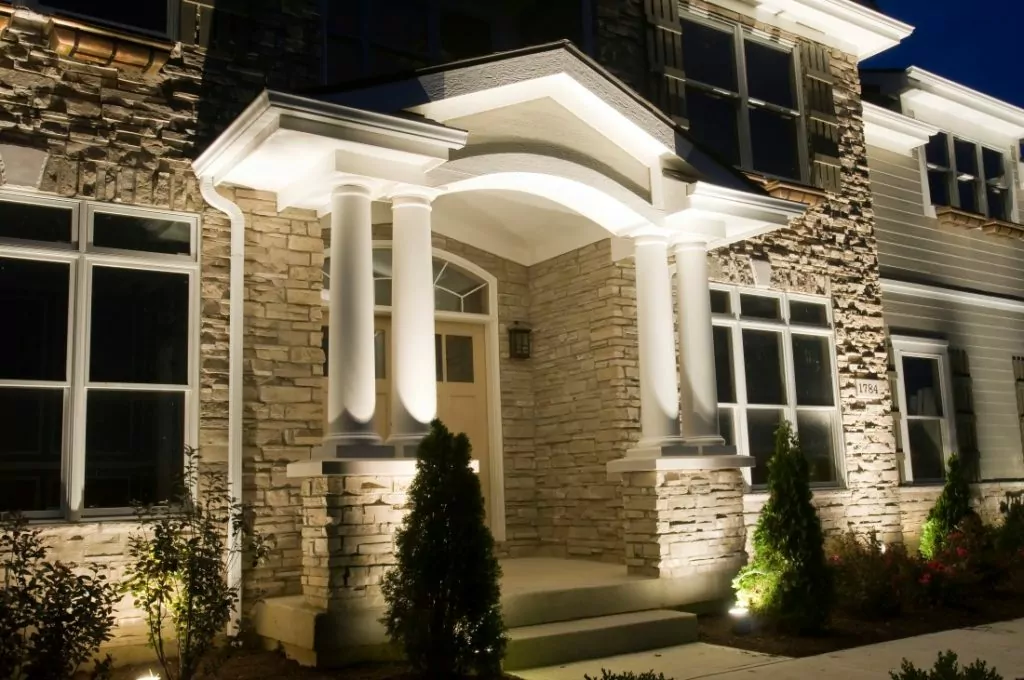 Have you ever noticed how a few strategically placed lamps can change the entire ambiance of a room? Well, the same can be said for your front porch! Whether your home boasts a beautiful wrap-around deck or a small front stoop, there are plenty of things that you can do to improve the overall look and feel of your front entry. Entryway lighting is crucial for setting the mood and inviting in your guests, so don’t hold back. Make the most of your front entrance lighting with a professionally designed and installed outdoor lighting system from Nite Time Décor.